
Some ideas start with a whiteboard. Savva started with a simple frustration.
We realized something strange about modern health technology. People are collecting more health information than ever before, yet very few can review it easily in one place. Most people now have multiple health portals. One login for a hospital, another for a specialist, separate portals for lab results or imaging, and often another app for fitness devices. People end up juggling several accounts just to keep track of what is in their records and apps. For those managing chronic conditions, that number only grows.
All this information exists, but it rarely connects. That gap became the starting point for Savva. Hundreds of people on the waitlist felt the same way. Today they can finally try it.
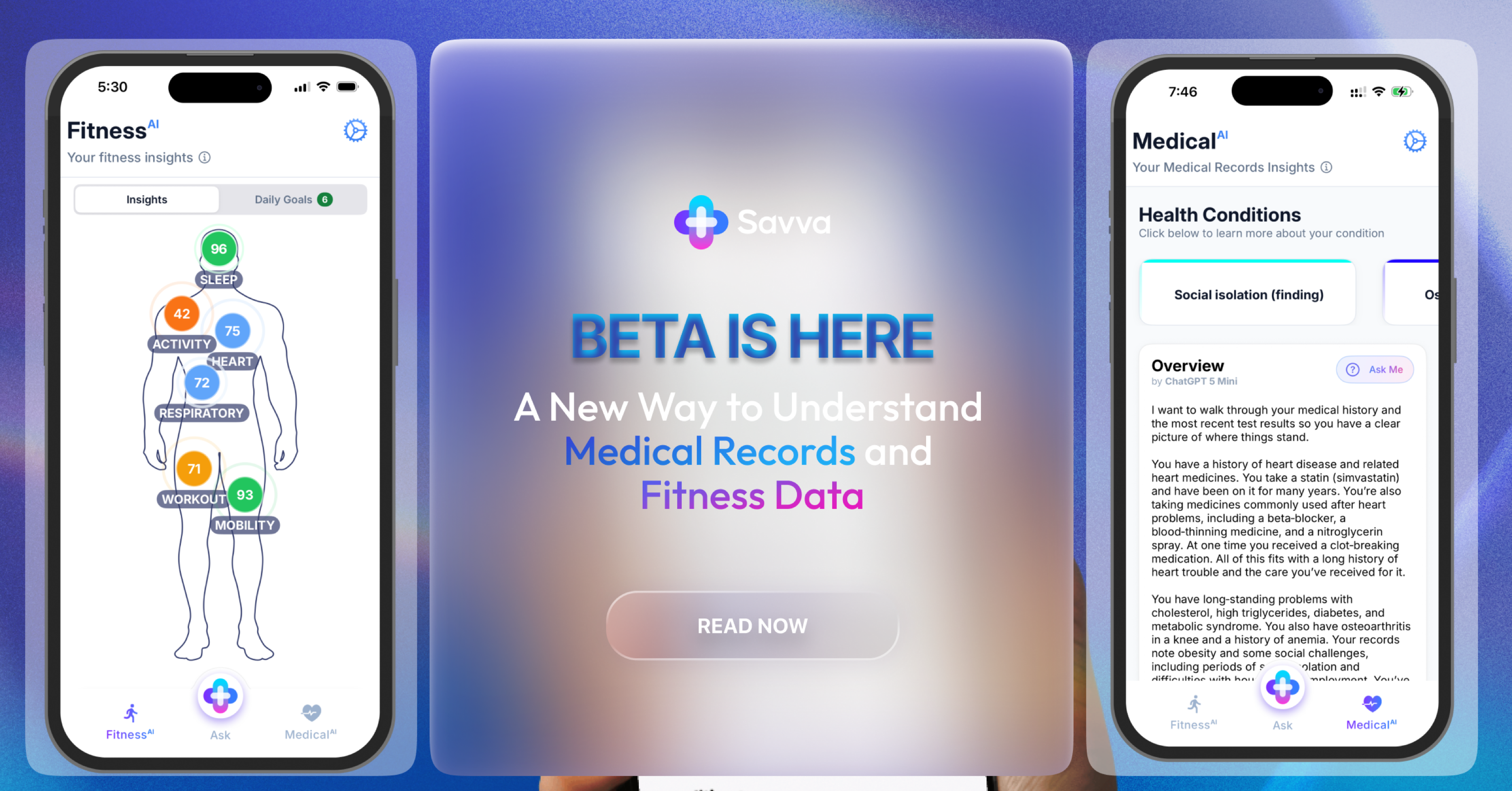
Today that changes. Savva connects medical records from more than 314,000 healthcare sites across the United States, brings in fitness and wearable data separately, and organizes everything into AI-generated medical summaries and fitness insights in one dashboard.
Instead of forcing people to jump between different portals and apps, Savva allows users to connect these sources and see their medical records and fitness data together in one place.
Why This Health Records App Took So Long to Build
Connecting to real medical records across that many healthcare sites is not a weekend project. It took months of work navigating FHIR interoperability standards, EHR system integrations, HIPAA-compliant data handling, and privacy architecture before a single record could be reviewed in the app.

Most health apps skip this entirely. They track steps or store PDFs. Savva goes further, connecting directly to your actual medical records through 32+ EHR systems, pulls them into the same dashboard as your fitness and wearable data, and organizes everything into readable summaries. If you want to understand what a longitudinal health record actually reveals, we wrote about that here.
That is what makes this different from Apple Health, Epic MyChart, or any single-purpose tracker. None of them do all three together.
What AI-Generated Medical Summaries Actually Look Like
Here is a concrete example of what the beta makes possible.
Someone has records at a primary care clinic, a specialist they saw twice, and a lab system their hospital uses. They also track sleep with Oura and activity with Apple Health. Before Savva, pulling that together meant three portal logins, a fitness app, and a lot of mental reconstruction before any appointment.
With Savva, those sources connect once. Medical records from EHR systems organize into AI-generated medical summaries in a more readable format. Fitness and wearable data surfaces as fitness insights alongside the medical record view. Questions about the connected information get responses from on-device AI or multiple cloud AI models. For a deeper look at how different AI models summarize the same record, read this.

The records do not change. The way they can be reviewed does. And for anyone who has ever walked into an appointment without the full picture, that difference is everything.
On-Device AI for Health Data: Privacy First, Not as an Afterthought
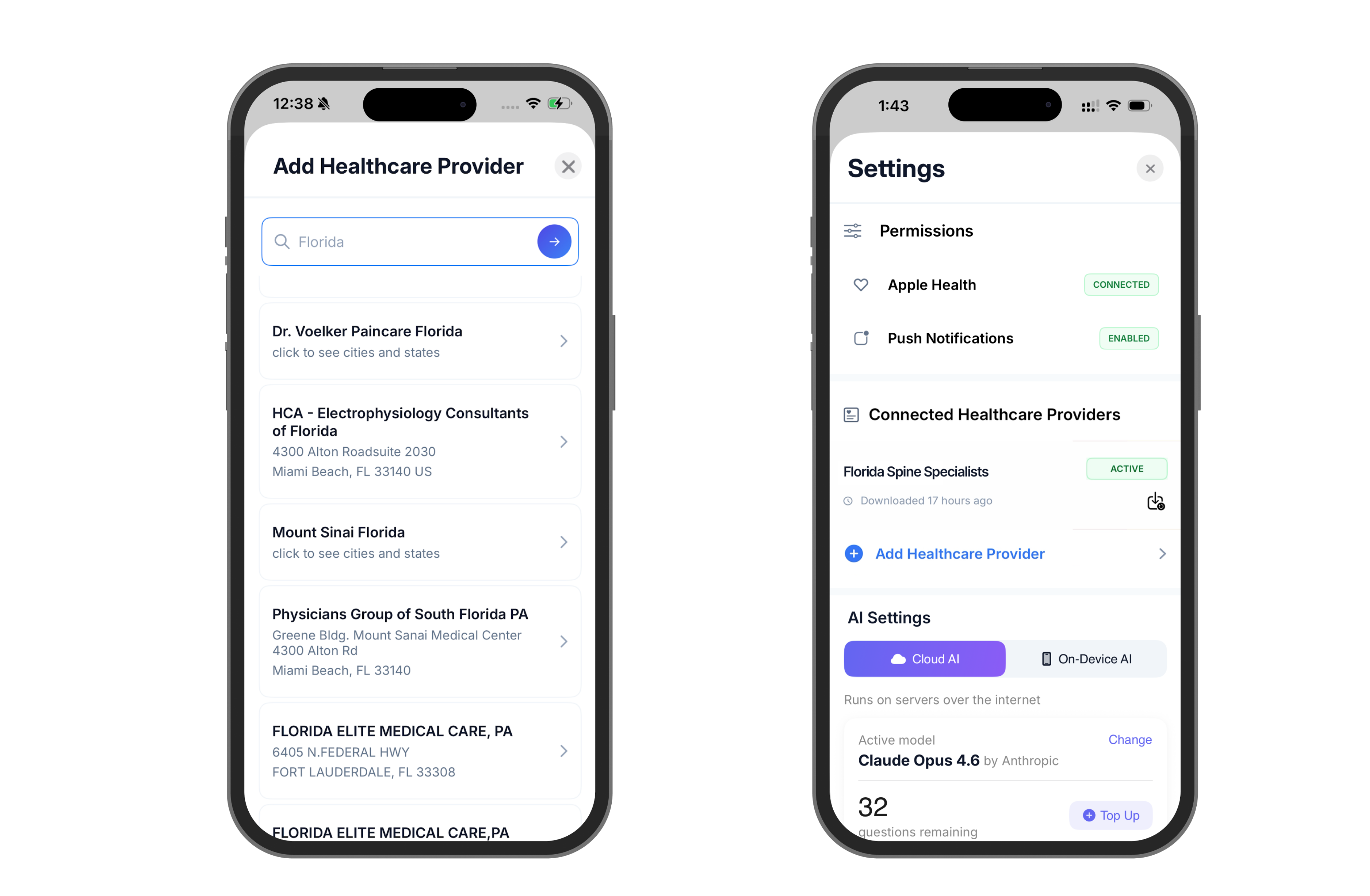
Health data is sensitive. Savva processes it locally on your iPhone by default. Nothing leaves the device unless you explicitly choose a cloud model, and even then the choice is yours with full transparency about which provider handles it.
Cloud AI is available for users who want additional model capabilities or want to compare how different AI models summarize the same records. On-device AI handles everything else, including offline.
This is not a privacy checkbox. It is the default.
What Comes Next
This beta is the starting point, not the finished product. The goal of the beta is to learn directly from people using the product: It is an early version, and that is intentional. The goal of the beta is to learn directly from people using the product.
- What questions do they ask most often?
- Which responses are most useful?
- Where can the experience become clearer?
Real feedback will shape what Savva becomes next.

Our long-term vision is simple: make personal health information easier for anyone to review, without sorting through scattered reports and complex charts. Savva is built with that direction in mind, and we are excited to begin this journey with our first group of users.
The Savva beta is live right now. Your records have been waiting in separate portals long enough.
Join the beta at savva.ai.
Your records, your data, one place.
FAQs
Q1. What is Savva?
Savva is a health data platform that brings medical records and fitness data into one place. It combines information from healthcare providers and personal health trackers into one dashboard and lets users review AI-generated medical summaries and fitness insights.
Q2. What kind of medical records can Savva access?
Savva can connect to medical records from more than 314,000 healthcare sites across the United States through integrations with 32+ electronic health record (EHR) systems. This allows users to view a unified timeline of their health history across different providers.
Q3. Can Savva work if my clinic does not use an electronic health record system?
Yes. Savva includes a QR-based workflow and document ingestion system that allows users to capture medical information even from clinics without modern EHR infrastructure. Users can scan records, upload documents, or take photos of lab reports and visit notes to convert them into structured health information.
Q4. What type of fitness information can Savva show?
Savva can display a wide range of fitness and wellness metrics including activity, sleep, workouts, heart-related metrics, pulmonary-related measurements, and mobility information. Fitness features surface wellness insights while medical records remain available in the same dashboard for side-by-side review.
Q5. How does the AI in Savva work?
Savva lets users ask questions about the information they have connected in natural language. AI-generated medical summaries organize records into a more readable format, while fitness features surface wellness insights from wearable and activity data.
Q6. Does Savva use on-device AI or cloud AI?
Savva supports both. Users can run on-device AI models directly on their phone for privacy-first processing, or choose to use cloud-based AI models for additional model capabilities and responses.
Q7. Is my health data private?
Savva is designed with a privacy-first architecture. Health data can be processed locally on the user’s device, and cloud models are only used when a user explicitly chooses them. The platform does not require creating an account or sharing personal information by default.
Q8. Can I ask Savva questions about my health records?
Yes. Savva includes a conversational AI interface where users can ask questions such as:
- What medications am I currently taking?
- How has my activity changed recently?
- Show me my latest blood test results.
- Help me find records related to an upcoming procedure.
Q9. Can Savva work offline?
Yes. Because Savva supports on-device AI and local data storage, many capabilities can work even without an internet connection, allowing users to access their health information anytime.
Q10. How much does Savva cost?
Savva offers multiple pricing tiers:
- Free: connect medical records, connect health trackers, and use core AI-generated summaries
- Plus Plan ($4.99/year): expanded AI chat and deeper fitness insights
- Pro Plan ($9.99/year): access to advanced cloud AI models and additional AI-generated summaries
Q11. Why is Savva launching as a beta?
The beta allows early users to try Savva, explore its AI capabilities, and provide feedback. This helps the team refine the experience and improve how AI organizes records into readable summaries before a wider release.